 Phone:
0086-15531448603
Phone:
0086-15531448603 E-mail:elena@hznuzhuo.com


For enterprises seeking reliable and economical on-site oxygen or nitrogen supply, selecting between Pressure Swing Adsorption (PSA) and Vacuum Pressure Swing Adsorption (VPSA) technologies is a critical decision. While both utilize adsorbent materials to separate gases from air, their operational philosophies and economic profiles differ substantially, leading to distinct applications.
Fundamental Process and Economic Scale
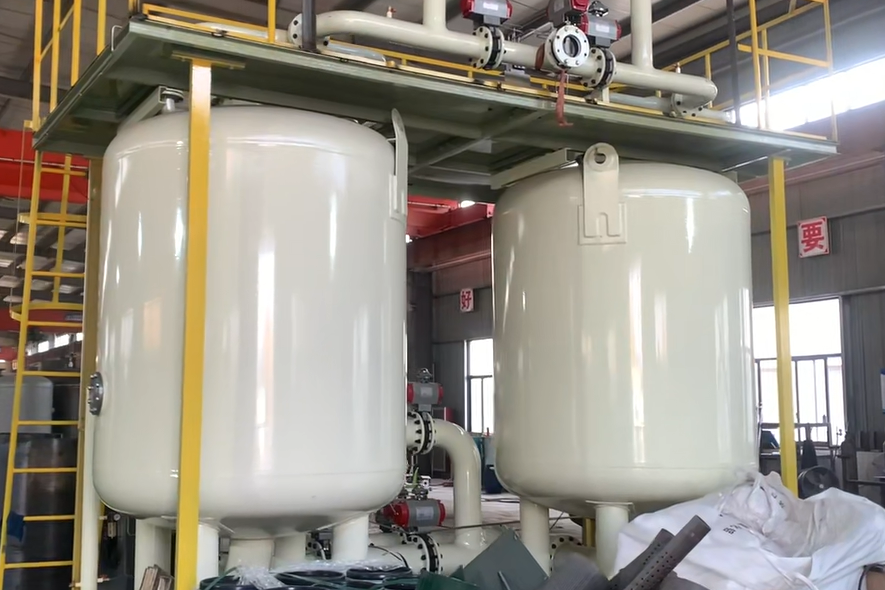
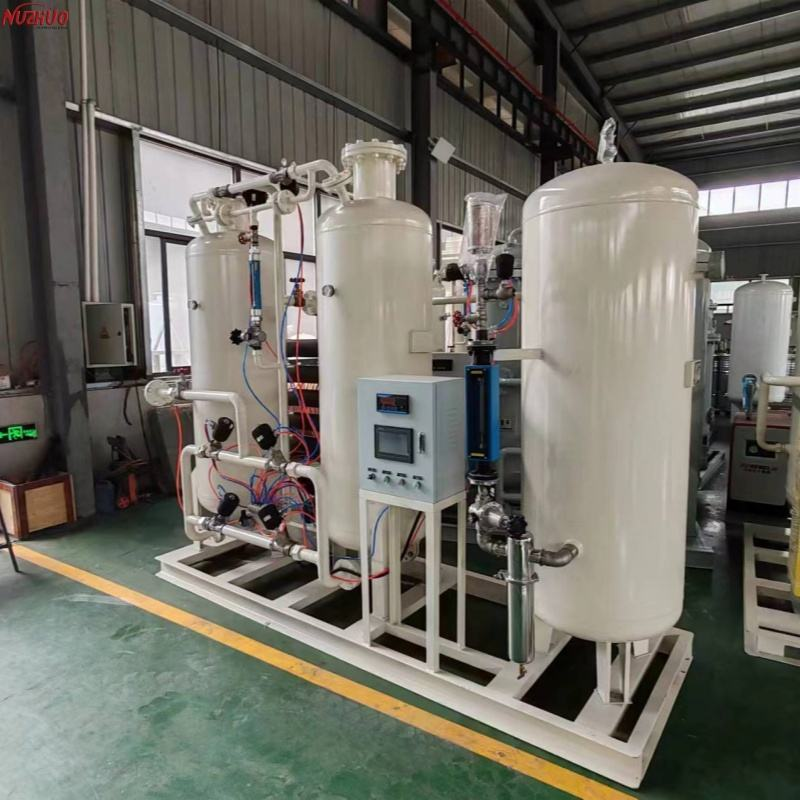
The core distinction lies in their operating pressure cycles. A PSA system functions at elevated pressures (typically 4-8 bar), employing a dedicated air compressor to force ambient air through molecular sieve beds. This method, while effective, is energy-intensive per unit of gas produced, making it most economical for smaller to mid-range outputs, generally up to 200 Nm³/h.
Conversely, a VPSA system operates on a sub-atmospheric cycle. It uses a high-capacity blower to draw in air and, most importantly, a vacuum pump to regenerate the adsorbent. This dramatically reduces the energy required for desorption. Consequently, VPSA technology achieves remarkable energy efficiency at very large scales, with standard units ranging from 500 to 5000 Nm³/h and beyond. The capital investment is higher, but the lower operating cost justifies it for high-volume users.
Product Purity and Project Timeline
Purity is another key differentiator. PSA systems are renowned for their ability to deliver very high and consistent purity levels—oxygen up to 95%+ and nitrogen up to 99.999%. This precision is non-negotiable in fields like electronics manufacturing, pharmaceutical processes, and advanced laboratory analysis. VPSA plants, optimized for volume and efficiency, typically produce oxygen at 90-95% purity, which is perfectly adequate for combustion enhancement, ozone generation, or wastewater aeration but unsuitable for high-tech applications.
Regarding lead time, standardized PSA skids, due to their modular design, can often be delivered and commissioned within a matter of weeks or a few months. A VPSA plant, being a larger, custom-engineered system with more complex components (large blowers, vacuum pumps, vessels), requires a significantly longer fabrication and installation period, commonly extending to six months or more.
Strategic Application Domains
This divergence naturally segments their application fields. PSA technology is the undisputed choice for specialized, high-purity demands. Its footprint includes hospital medical oxygen systems, chemical synthesis, laser cutting (for nitrogen), and food packaging.
VPSA technology dominates the landscape of large-scale industrial oxidation and process gas. Its primary markets are metallurgy (furnace enrichment), glass manufacturing, pulp and paper bleaching, and large municipal wastewater treatment plants, where thousands of cubic meters of oxygen are consumed daily.
Conclusion: A Guide for Selection
The choice ultimately hinges on the user’s specific priorities.
Opt for a PSA system when your requirements center on high purity, your gas volume needs are low to moderate, your project timeline is aggressive, or your application is in a sensitive sector like healthcare or electronics.
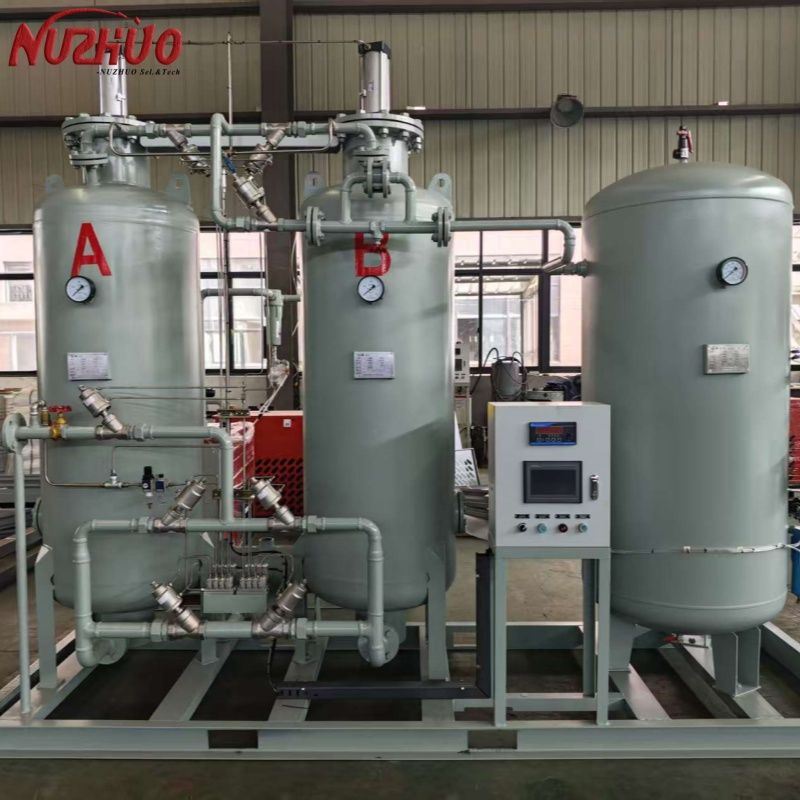
A VPSA system becomes the compelling choice when the driving factors are very high volume demand and minimizing lifetime operating costs, with acceptable product purity in the 90-95% range. It is the solution for continuous, large-scale industrial processes where energy consumption is the principal cost driver.
By aligning the fundamental strengths of each technology with project-specific parameters of scale, purity, and economics, buyers can make an optimal, cost-effective investment for their long-term gas supply needs.
If you want to know more information, please contact us freely:
Contact:Miranda Wei
Email:miranda.wei@hzazbel.com
Mob/What’s App/We Chat:+86-13282810265
WhatsApp:+86 157 8166 4197
插入的链接:https://www.hznuzhuo.com/psa-n2-plant/
Post time: Dec-26-2025


